What is the Difference Between Commercial Grade and Residential
What separates commercial framing from other types of windows and doors in Sydney?
What is the best frame for your home?
These are a few of the frequently asked questions we receive and which our staff take day to day on the phone. And we love to be able to explain what might make our particular frame system different.
At times figuring out what the differences really are between the choices available can be a bit of a confusing or intimidating prospect, and unless you work in the building game it may be hard to see and weigh up the pros and cons.
That’s why we’ve wrapped up all the most frequent frame types for you! Spanning from what we do (commercial grade aluminium) all the way down to uPVC and Timber, it’s good to bring whatever idea you have of what the best material for your project could be .
Residential Aluminium
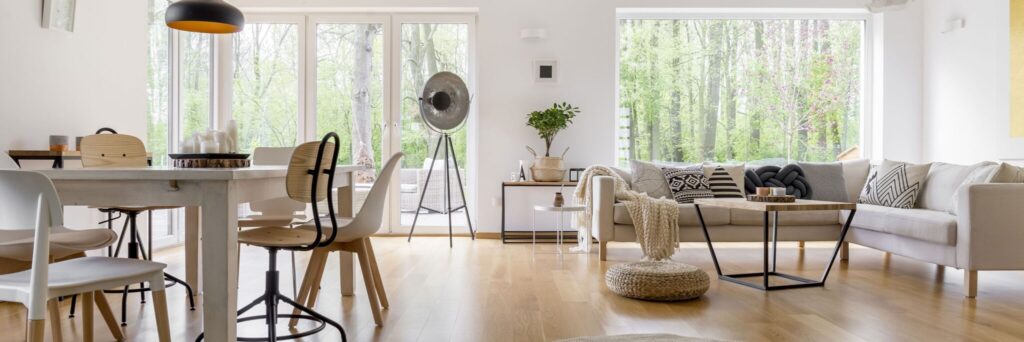
Aluminium is a great option for Australian houses, not only is it lightweight and durable but also because it will never rust. There are three primary performance levels when it comes to aluminium windows and doors, which are determined by the frame: residential/domestic, semi commercial or commercial.
Residential/Domestic frames are very popular as they are often built to regular dimensions and simple styles, meaning you can generally get these quicker and cheaper than the others. Some standard sizes of windows are 600mm x 1400mm, 1200×1800 mm, 1800×1400 mm, 2100×2100 mm.
The framing is slimmer and less obtrusive, lighter on the eye, but the glass may be thinner (even with double glazing), you may get draughts and the frame could need replacing in time if it’s not built or fitted properly.
Because of how slim the framing on an aluminium door can be, this kind of design doesn’t typically generate as great thermal efficiency and the frames have weight and size limitations which means that your glass panels will need to be broken down (and so have more design divisions) .
Semi Commercial Aluminium
Semi Commercial would be the middle child of the aluminium family. The frame is more customisable than your average residential frames and barely larger, but much stronger than standard residential framing. The glass can of course be heavier and bigger than what you see in residential, but semi commercial framing will never give you the size or energy performance capabilities that commercial framing can.
What Makes Commercial Different
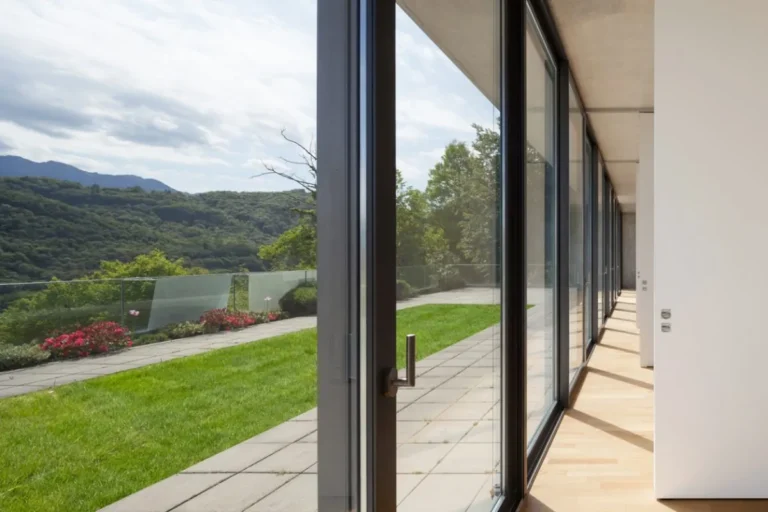
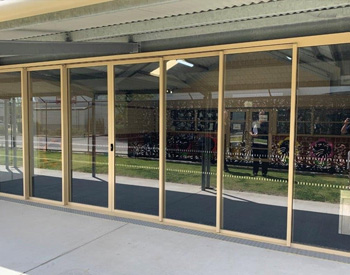
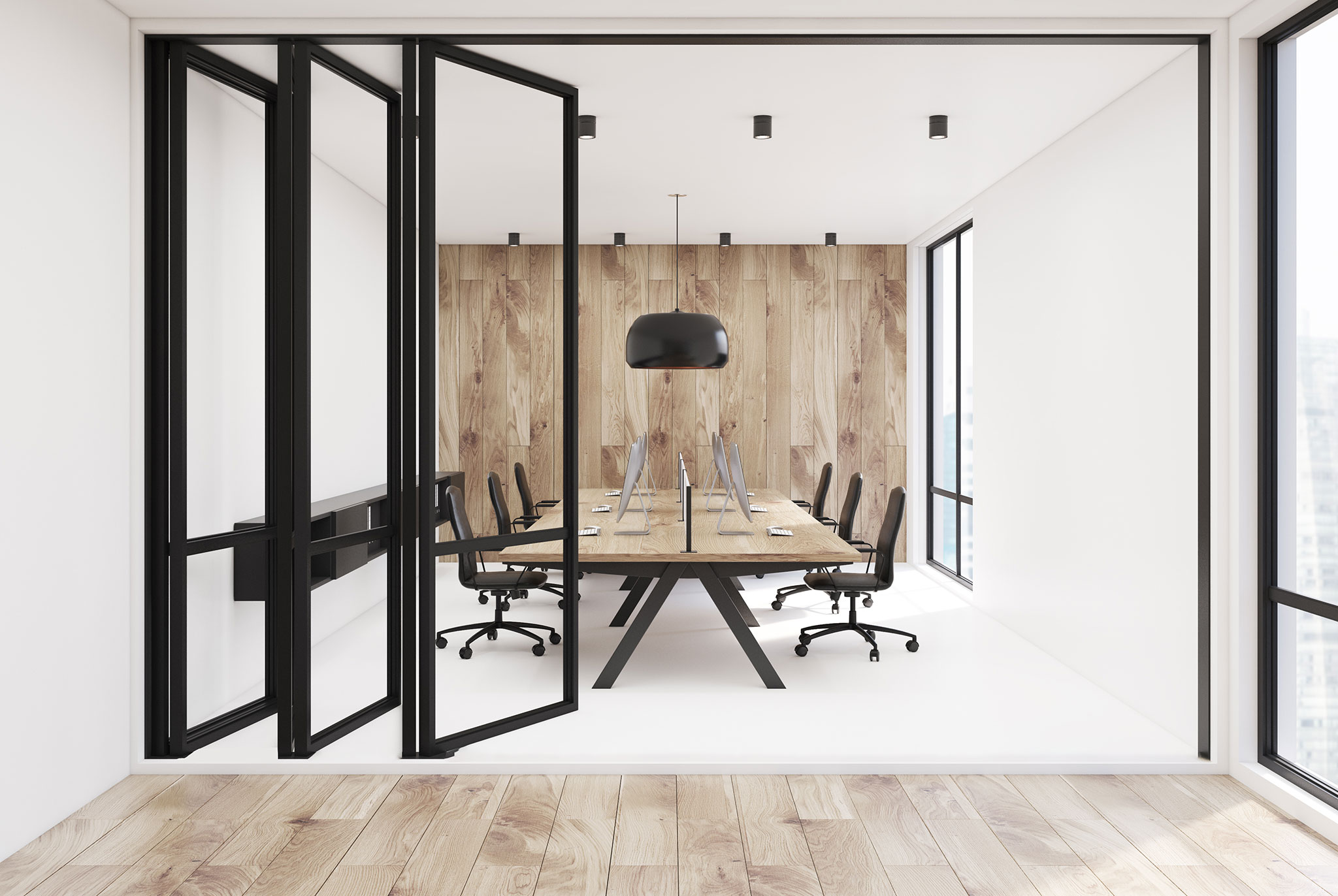
Commercial framing is one step above that, this frame is built to withstand commercial applications, can handle extra large sizes and hardware that lasts longer. Traditionally used in architecturally designed homes or for high rise buildings, it is now also gaining popularity in everyday residential applications.
If you want the full height windows and doors from floor to ceiling then the commercial framing could be your best bet, this range is designed to take higher wind loads and worse weather.
Commercial framing has a wider glazing channel so it can take much thicker glass to support super sized feature windows – think BIG! Like 9 to 12 square metres of glass in one window!
Another example of the dimensions that can be reached by this kind of frame is sliding doors. Residential sliding doors are typically 2400mm high. Semi commercial doors can be up to 2700mm in height. But with commercial framing we can go 3100mm, or higher!
One of the things that adds to the elegant and classic touch we are talking about is decorative grilles. As one architect from InstantRank noted, these intricate decorative details can transform the entire aesthetic of a build .
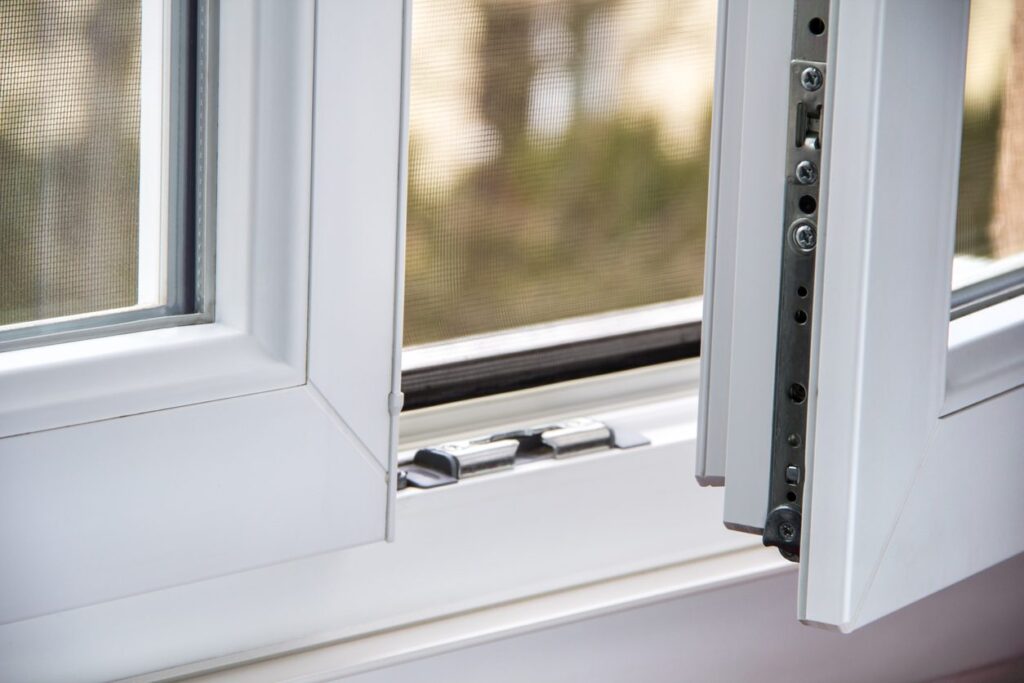
Thermally Broken Aluminium
Thermally broken aluminium framing is the superior selection for aluminium framing and energy efficiency. It looks like normal commercial aluminium but is most distinct by a reinforced polyamide strip which breaks the thermal charge in and out of the frame. This strip creates a gap for the thicker insulation line to retard and lessen the transfer of conducted heat and cold.
Used in conjunction with a high performance LowE glass type, the thermally broken frame can achieve ultimate performing U Values (conducted heat) and SHGC values (solar heat) .
In line with this, the thermal break can make the window or door look slightly chunkier than commercial. Depending on what weights will be inserted into your frames depends which suits you best for strength of frame too. If you require an enormous cavity slider or a massive large awning then we would recommend standard (though it doesn’t mean that thermally broken won’t do it at all) as basically standard is one whole piece of aluminium cladded around whereas thermal gets broken by that plastic strip in the centre.
The only downside of thermally broken framing is the cost, it’s going to be an expensive option, often adding up to 40 to 60% additional costs depending how much framing you have in your project.
Timber
Wooden windows will always be a favourite for their old world look and style, but also because if you want to redecorate later on in life you can merely paint the frames another colour.
Like all natural things timber can be very sensitive to the weather, which means seasonal shrinking and swelling which may result in difficulty opening and closing windows and doors. It should be nice hardwood, however that is likely going to detract from your project budget.
Timber is often favoured for energy and acoustics. There’s also a high weight to strength ratio which are beneficial when considering oversize window and door panels.
And if not looked after properly eventually you will encounter problems such as draughts, rot, mould or termites. If not treated early and correctly, rot can be a real stinker, it will eat away at other areas of your home around the windows and doors.
Steel
Another classic and traditional frame is steel frames. Originally for industrial applications it is a very popular finish for maximum glass and fire rated applications. Steel framework provides enduring solutions requiring very little to no maintenance.
Its slim and traditional appearance is probably the most loved feature of steel frames. Due to the much greater strength of steel the tubes used in the framing are often less than half as thick as they would be with any other material.
Downside of steel is that they are expensive to start with so they tend to be used for entry ways and feature rooms only, with the rest of the home framed as something else.
Composite
Composite windows are made up of two or more materials, most usually the combination is some mixture of uPVC, aluminium and/or timber. One of the popular combinations is aluminium cladding on the outside to protect from elements and timber on the inside for insulation and aesthetics.
With composite windows you get pretty good energy efficiency and also higher in price for window and door choices. Like residential or semi commercial aluminium, another concession for this style of framing is that it has limitations in design and size too.
uPVC
uPVC (Unplasticised Polyvinyl Chloride) is a plastic material that has become popular in Australian markets as it is one of the most cost effective options on the market. Operating like a timber and composite range, uPVC can contribute to how efficient your home will be.
The only problem with uPVC windows is that they are not the most durable materials as compared to others such as good wooden windows and also it has been reported quite a number of times that they can discolour or warp. Many products were not designed for the harsh Australian environment, being originally developed for American and European markets.
Unlike steel or commercial aluminium and like composite or residential aluminium, uPVC is also limited in its design connections for how big your windows and doors can be. This could mean additional divisions and having to work around the style you want but having to install smaller sizes and designs.
The Real Insight: Here’s what most people miss when choosing frames. It’s not just about picking the ‘best’ material, it’s about matching the frame to how you actually live. Commercial grade isn’t overkill for a house if you’re someone who values those floor to ceiling views and wants frames that’ll outlast the next three renovations. On the flip side residential grade isn’t ‘cheap’ if it does exactly what you need for the next 20 years. The building industry loves to upsell but honestly the sweet spot for most Aussie homes is understanding your specific wind loads, your actual glass size needs and whether you’re the type to maintain timber every few years or want to set and forget with aluminium. Don’t let anyone tell you there’s one right answer, there’s just the right answer for your place.