
Types of Window and Door Frames Available In Sydney
Glazing Frame Types
The glass windows and doors are available framed in timber, aluminium or steel. And the best part is you can even find a hybrid timber and aluminium frame also, with it being timber on the inside, aluminium outside.
Timber Framing
Hardwood windows are typically more high maintenance as they will need recoating through their years in the home. They have the ability to add a lovely natural warmth to your home and if you are somebody who leans more toward a traditional feel you will probably love this option. And there are manufacturers who produce incredible large, open and modern timber framed glazing as well, so don’t think they’re just for traditional houses. With large sliding doors and windows these can have very minimal/fine thresholds and tracks as they can be top hung, and function beautifully to create that indoor outdoor connection we’re after.
Aluminium Framing
Aluminium framed glazing is widely used in building industry at home and overseas. Depending on your spend, aesthetic you would like and hole sizes you select you can choose: standard residential framing, commercial aluminium framed glazing or a level that falls in between. You get to choose: powdercoated finish, or anodised. Every manufacturer will have a standard range, or you pay extra to select from an extended range.
Traditional domestic glazing will usually be the cheapest of all frame styles. Its total possible height is 2,400mm. Taller, and much larger expanses of glazing, can be achieved in aluminium framed semi commercial or commercial grade windows.
Steel Framing
Steel framed glazing is brilliant for that industrial look. Thinner in profile than timber or aluminium, it’s also costlier, but such a gorgeous choice and will make such an impact on the style of your house.
This type of steel framed window makes a very fine and subtle hold in a wall full of glass.
Special Note
Never use a material that’s imitating another. You could purchase a timber grained aluminium framed window range, they are even powdercoated with a ‘timber look’ finish in powdercoat. Things should seem to be how they are. Honesty in design is always best.
Types of Window Openings
So many types of window and door openings. I’m going to go over some of them here and some specifics to think about. This is not an all encompassing list, but it covers the bulk of them. Normally the next thing to keep in mind is screening, security, expense and impact on space (so stay tuned for those sections).
Fixed Glass
As it sounds, glass that will not open. Occasionally, you just want the view and not the airflow. Operable glass isn’t mandatory for every piece you put in your home. Fixed glazing in general has a smaller frame, and can also be fantastic where the view is, but not the ventilation.
Sliding
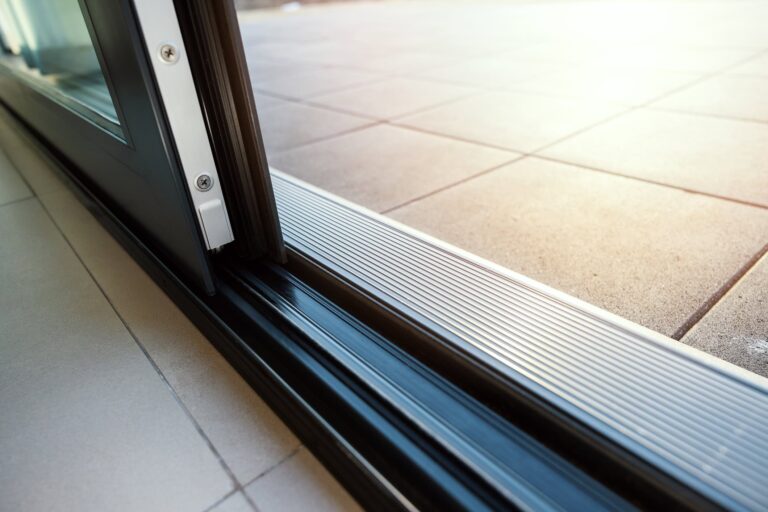
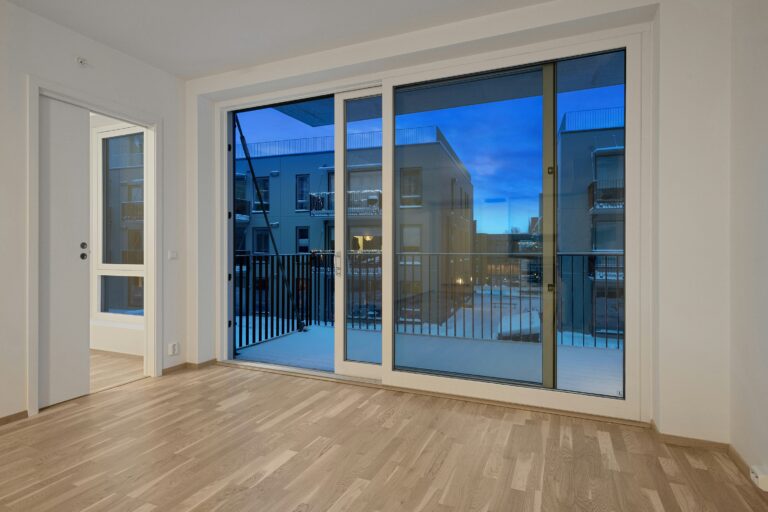
Sliding windows and doors are the most economically priced operable window in aluminium frames. You can detect them so easily as they move across the frame. With aluminium sliding windows and doors the track for screens is already integrated as standard.
Awning
Awning windows are those that open out at the bottom, using either a winder system, or ‘friction stays’ (things you unclick to then push it out). Of course, winders have a chain attached to them so it limits how far the window can be opened. To do that there will need to be some sort of screening on the inside, and if a winder, you’ll have to have one small (and I hope obvious) adjustable portion of screen to open the window, then close again.
I prefer awning windows since they are fairly weather proof when open (when you have light rain and not too much wind) as pushing the window out makes a bit of a hood over the opening.
Casement
These windows are hinged on the side and open outwards. They’re amazing for catching breezes. I’ve always loved this use of a casement style opening but this time on something solid. You can also angle them to literally channel a breeze inside. You can use them as solid or obscured panels too to control views and privacy. Screening must be on the inside.
Louvre
When we start to get into louvres, we get into more expensive window land. They’re like casements in that they’re wonderful for catching breezes. Blades can be clear, tinted or obscured glass and you can also use timber or aluminium blades. Because of the angling of the blades, you can select an obscure or solid blade material, and thus manage privacy. The blades shown are 152mm blades, and there are also 102mm blades. The maximum width you can have louvred is 900mm at 152mm blades and 750mm in 102mm blades.
Bifolding Windows and Doors
Bifolding windows and doors are doors that concertina back into a top and bottom frame. They are often incredible as the ultimate in opening up to the outside.
This is what homeowners often describe to me as their ultimates, and the quality they will specify at a minimum when opening living areas to outdoor entertaining spaces.
I disagree. While they can be wonderful, they can also be difficult to live with. Even the way they operate means that they have a clearance in which to open and close itself, yes, it will munch up some floor space you might want for furniture.
They’re also great when they’re full open, fantastic, but that’s the only place. When they’re open, they are OPEN. And when they’re shut, they are closed. When it comes to bifolds, there isn’t much of that “in between”. So, since not all panels can open and close together, I would suggest you make sure that one of the panel opens freely (separately) from the other, thus giving ease of just opening or shutting it down for quick movement in and out. I would also put drop bolts in the sill on each pair of door panels so you can leave them partly open and locked that way.
Sashless or Frameless
A sashless or frameless window is a double hung window with no edge framing on the moveable glass panels. So the window panes or panels slide past each other on a counterbalance (which is in actual fact housed in the side frame, which is normally referred to as a “window jamb”), and you will find there’s this small handle on the window itself.
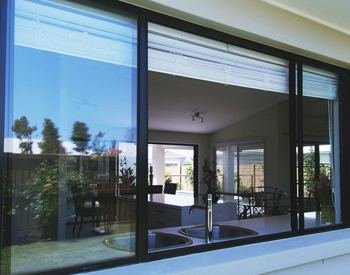
These are the least obtrusive type of opening window, as there is no framing around the opening parts to obstruct your view. You can get them horizontal moving, or vertical moving.
Yep, they’re pricey. But they’re stunning. And like so many things, it’s a matter of weighing the effect on your spaces, and the feeling you’re after against whether investing in them is worth it to you.
Glass Type
Australian Standards and Building Codes detail different needs for type of glass depending on its location, height above ground and if doing other jobs (like acting as balustrade).
These rules usually relate to its ability (or not) to handle an impact, and what it does once it has been broken, for example in a bathroom when bare feet come into contact with shattered glass.
When you have to slap on a little label or etching so people stop walking into the glass (you know, kind of like when they put those marks on sliding glass doors).
See current codes, this one from window manufacturers is a good start.
Tinted or Laminated Glass
Glass can be tinted by adjusting the additive (metal oxides) used in its production or by altering an adhesive film applied post installation. Glass can be laminated (glued) with an interlayer between the glass to offer privacy, and/or sun protection.
I typically also always recommend that you choose the glass manufacturers minimum level of tint for the windows and doors in your home. It enhances the solar performance of the glass and also gives some privacy and glare control during the day.
If you have significant amounts of west facing glass, primary sun exposure towards the mid to late afternoon or have skylights you may want a higher performance glass including laminated “Low E” glass types. There are amazing things you can do with glass these days to keep heat in and out of your home while keeping your views and light. Visit glass manufacturers for further information about glass tints and types.
Obscure Glass
At least sometimes, privacy and light is what you want. The simplest way to achieve this is by using a type of opaque glass for your windows and doors. This is perfect for bathrooms and laundries. My favourite kind of obscure glass is frosted or sandblasted finish.
View a range of different types of obscure glass at glass suppliers.
Screens, Barriers, Window Treatments and Motorisation
Screening
Of course, the moment a window leaves the frame, say an awning or casement or louvre or bifold, there’s implications for how it can be screened.
Louvres with a frame thick enough that you can attach the fly or security screen to the OUTSIDE of the frame and still open them.
Other kinds of windows, you have to add something on the inside that you can then push out to open it. So, for example the windows open outwards and are generally casements (hinge on the side) and their screens all hinge open inward.
Some systems have this amazing system for big openings which rolls out of the frame. Openings up to 7.6m wide! The screen is self tensioning, so every time you retract it back into the side frame, it tightens up again. Believe me I know, this one below was during a project with a friend (whose place it was) and my son, aged 2 at the time, ran full pelt into the screen. So you can imagine my horror as the screen took a big 2 year old sized bulge to it. The homeowner patiently rewound it back into the frame and pulled it out again, good as new.
Sliding glass doors here can be slid right off the opening, meaning they slide not only out of your house but over the outside facade of your home. This then makes space for a completely gap free opening to the outside, that can be screened as well.
Security
You need to think about how you will lock your windows, both open and closed, before you decide on a type. If you want to leave the windows open when you are sleeping, and hence secure (a desire of many north of the NSW border) then this is particularly pertinent.
Some security can be provided by keying and/or screening as per security mesh systems, or with fixed bars.
When specifying your windows and doors, how many locks they arrive with you need to understand. If you are building, or renovating a complete new home then you can order them with the cylinders all keyed alike, using the same key. This will save you from having a gigantic keyring filled with keys or having way too many locks in your home.
I remember Mum cutting timber dowels to size and using them in each of our sliding windows (in our bedrooms) so they were only so far open despite what the lock was doing!
And remember too that security can also keep you locked in as well as keeping others locked out. This is fine for the fleeing teenager, but consider, how will you be able to escape a fire in the future?
Window Furnishings
Most people, if you prefer privacy at night time and wish to manage that heat loss, while maintaining a style and aesthetic in your interior, are going to want some type of window furnishing on their windows. These may be blinds, internal shutters or curtains or similar.
So before finding a window opener make sure you think about how this part will fit in:
- If you have floor to ceiling glass, will you need a recessed pelmet to accommodate the top of your blind or curtain without blocking off the top of your glazing?
- Do you like to sleep with your windows open and the blinds/curtain closed? Will that be possible?
- Do you have enough wall either side of your glazing to push curtains right off onto, or will they still obscure the windows?
Ok, that’s quite a few questions, and as you can see it does take some planning when selecting your windows and doors to get the best possible end result!
Motorisation
All kinds of windows can be motorised to some extent, so you can open and close them using a switch. Some are far more attractive than others, methods of motorisation too. Some are installed as an attachment to a window, while others are integrated into the window range.
If you are wanting to make them electrical then consider this early on, as you will need to be able to incorporate electricity and decide on where you will control it from.
If budget starts to stretch that wallet a bit too much, then leave any consideration for making them motorised until a later date, and you can save yourself some time if whilst running all these cables through your walls you run cabling for an electrical supply.
If you want to use operable windows that you don’t want to motorise then make sure that is practical, the window can be reached for opening and for closing of course.
The Reality of Living with Your Glazing Choices
Here’s something most articles won’t tell you: the windows and doors you choose will shape how you actually live in your home more than almost any other decision you make. I’ve watched friends install those stunning floor to ceiling bifolds they’d dreamt about, only to discover they spend most of their time with them either fully shut (because it’s too cold, too hot, or too exposed) or dealing with the awkward dance of trying to secure just one panel while the rest flap about. The in between moments, the gentle afternoon breeze while you’re reading, the security of sleeping with windows cracked open, these are the moments that actually define comfort. Not the Instagram worthy full open position you’ll use three times a year. Think about your real life, not your aspirational one, and you’ll end up with glazing that serves you every single day.
Finally
Hell of a ride that, wasn’t it? And, as I mentioned before, this is absolutely not an indepth list of the glazing in your house. I did not cover double glazed, bushfire rating, wind loads, guillotine doors, sill section or where you actually can buy your windows and doors from. Another time hey?
And, for those of you that are like “Yep, but windows though?” you’re better off consulting suppliers in your region. Pricing varies depending on your application, location and the system you select. You can use that order I’ve listed the operable sorts in however, as a cost ranking (least at fixed glass up to most at sashless).